



in Español / Spanish translated by Santiago Chau Príncipe
This object has been translated into 8 different languages by 8 different users
Se necesitan condiciones especiales para que un fósil se forme. La materia orgánica original (p. ej., un animal o una planta) debe estar en condiciones donde no se llegue a pudrir completamente, lo cual normalmente significa un ambiente sin oxígeno como una ciénaga. Una vez allí, el lodo a su alrededor se convertirá en piedra con el tiempo, y los minerales de la roca se filtraran dentro de la materia orgánica para convertirla en roca también. Así es como obtenemos fósiles.
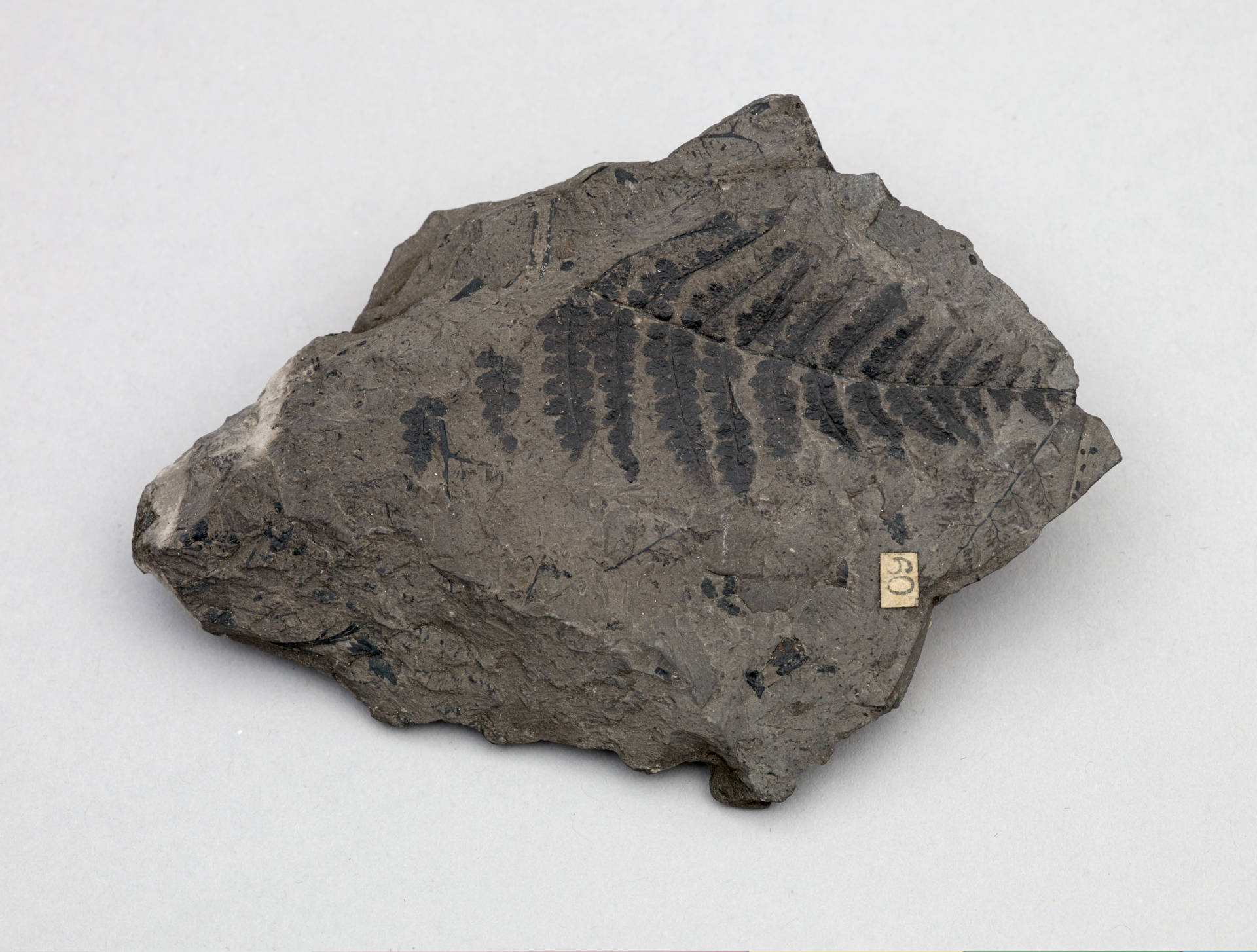
En el caso de este helecho fósil, se formó durante el periodo carbonífero, y la forma oscura de las hojas del helecho es fundamentalmente carbón. El carbón, de hecho, viene de plantas como esta, por lo cual se dice que el carbón es un combustible fósil.
¿Tienes un fósil favorito en el Museo de Mánchester?
Do you have something you’d like to say, in your own language or English, about the object or translation? We’d like to hear what you think.
Translations are community-sourced and for anyone to participate in, however you use your language. For more information, see Community Guidelines.
Write a Reply or Comment