



in Italiano / Italian translated by Isabella McNamara-Catalano
This object has been translated into 8 different languages by 8 different users
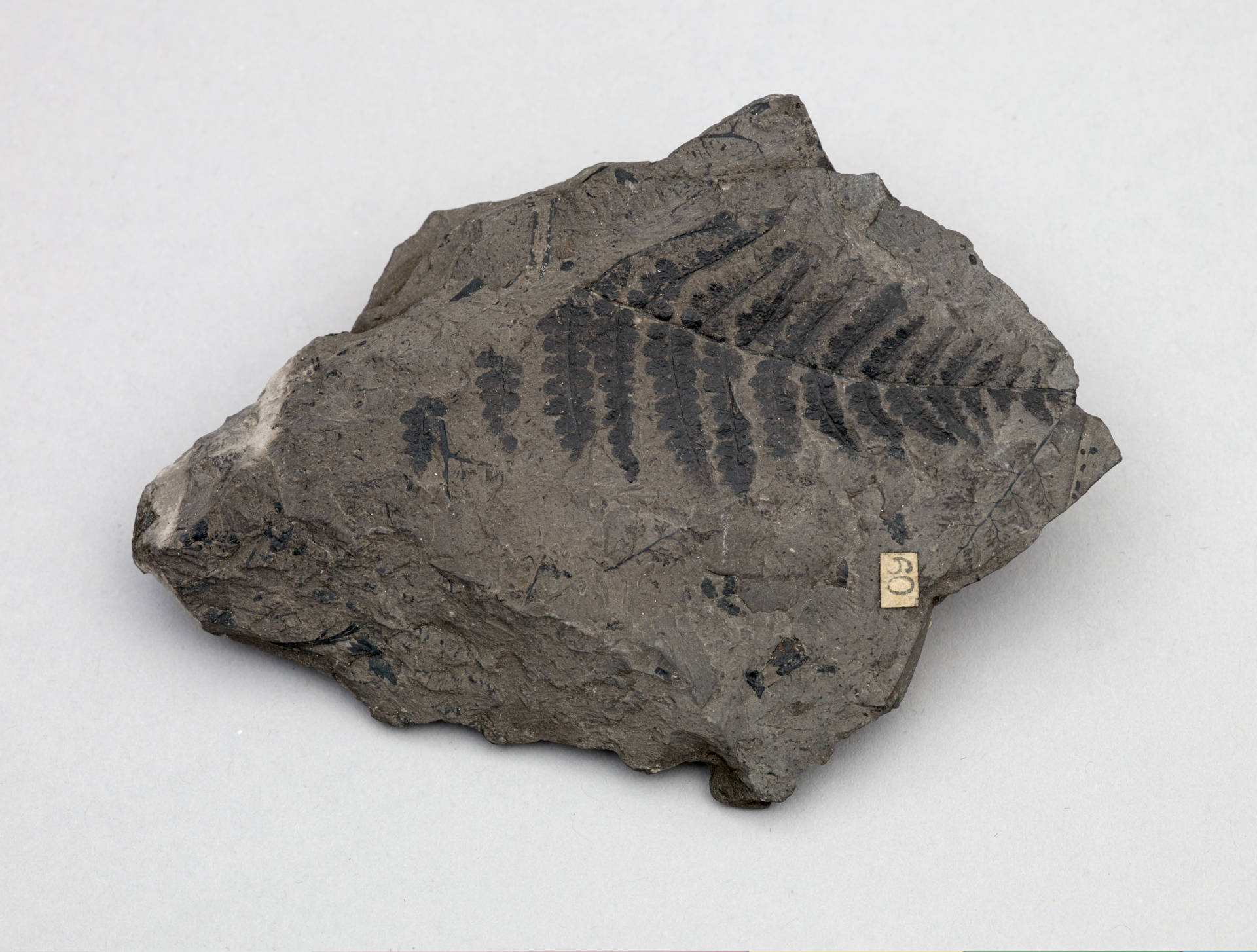
Perché si formi un fossile, sono necessarie condizioni speciali. La materia organica originale (ad esempio, animali o piante) deve trovarsi in un ambiente dove non si decompone completamente, il che spesso significa un ambiente privo di ossigeno come una palude. Una volta lì, il fango circostante si trasformerà in roccia nel corso del tempo, e i minerali dalla roccia si infiltreranno nella materia organica trasformandola anch’essa in roccia. Ecco come si formano i fossili.
Nel caso di questa felce fossile, si è formata nel periodo Carbonifero e la forma scura delle foglie della felce è essenzialmente carbone. Infatti, il carbone proviene da piante simili a queste, motivo per cui il carbone è conosciuto come fossile combustibile.
Riesci a trovare un fossile che ti piace al Manchester Museum?
Do you have something you’d like to say, in your own language or English, about the object or translation? We’d like to hear what you think.
Translations are community-sourced and for anyone to participate in, however you use your language. For more information, see Community Guidelines.
Write a Reply or Comment