



in Română / Romanian translated by EXPO BIZZ RO Nov26 Manchester
This object has been translated into 7 different languages by 7 different users
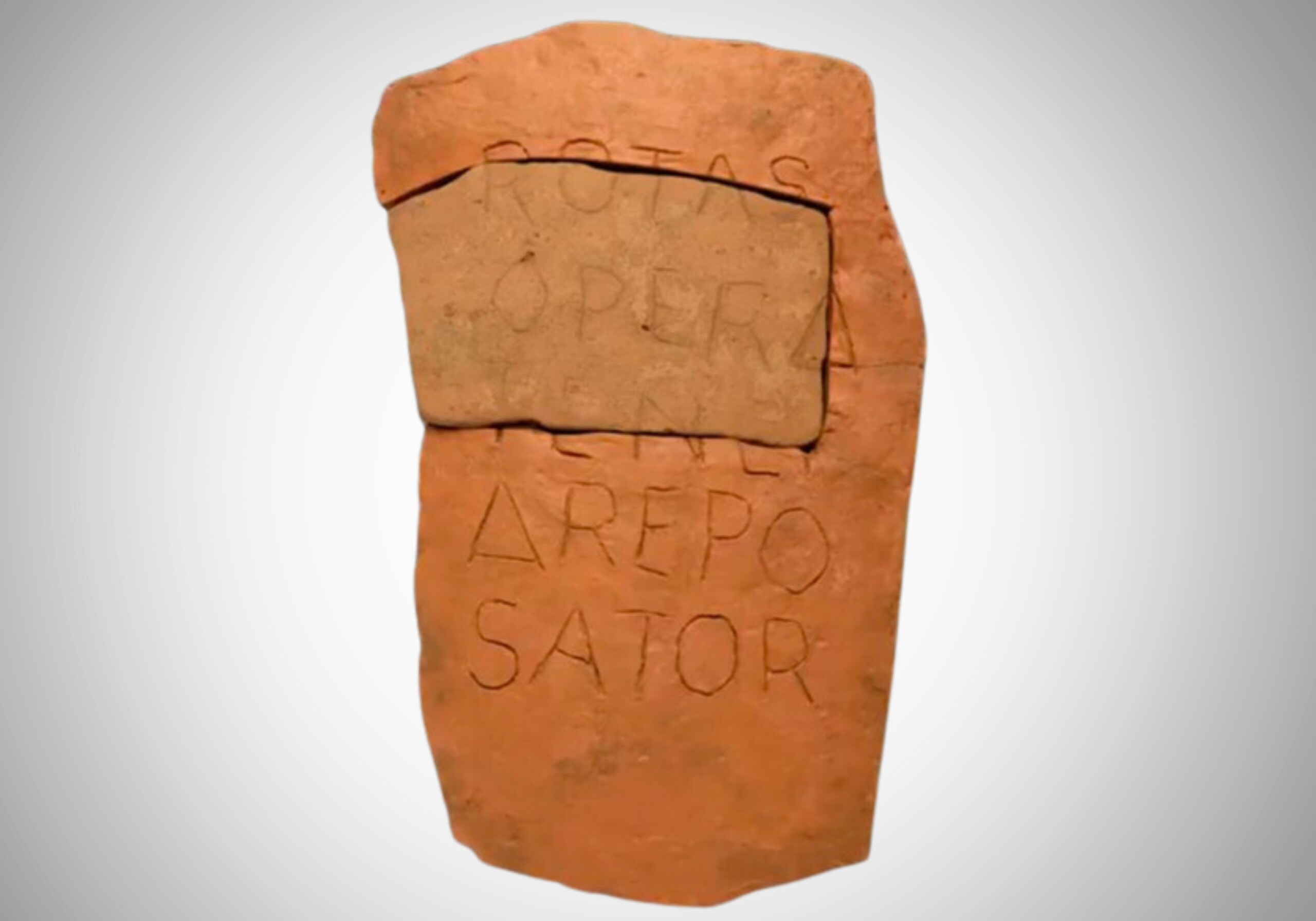
Descoperit în anul 1978 în urma unor săpături arheologice din centrul oraşului Manchester, acest obiect de ceramica este unul dintre cele mai emblematice exponate din colecṭia noastră de arheologie.
Obiectul datează din anul 180 d.Hr., perioadă în care oraşul Manchester era o aşezare romană, numită Mamucium. Aceasta era formată dintr-un castru unde se desfăşura viaṭa militară şi o zonă civilă numită ‘vicus’. Trupele romane din castrul Mamucium erau formate din soldaṭi din diferite regiuni si provincii, ca de exemplu Germania, Galia, Hispania. Deci, Manchesterul multicultural pe care-l cunoaştem şi pe care-l îndrăgim azi este aşa de multă vreme.
Acest obiect de ceramică are o inscripṭie latină fascinantă care ar putea fi cea mai veche dovadă a existenṭei creştinismului in nordul Marii Britanii.
Textul latin este: ROTAS OPERA TENET AREPO SATOR.
O posibilă traducere în limba română: SEMANATORUL AREPO CONDUCE ROTILE (PLUGUL) CU GRIJA.
Textul latin este un palindrom bidimensional în care cuvintele pot fi citite la fel in toate direcṭiile. Iar dacă rearanjăm literele in forma de cruce obṭinem expresia PATER NOSTER (TATAL NOSTRU) care se intersectează la litera N. Din PATER NOSTER lipsesc literele A şi O care poate aminti de vorbele lui Iisus in Biblie:’ Eu sunt Alfa şi Omega, începutul şi sfârşitul.’
Este posibil ca pătratul Sator sau careul de cuvinte din Manchester să fi servit ca simbol secret al credinṭei creştine într-o perioadă de persecuṭie a creştinilor de către autorităṭile romane. Altii cred că inscriptia a fost pur si simplu un joc de cuvinte, ceva distractiv de făcut în timpul liber.
Voi ce părere aveṭi?
This translation comes from a group of Romanian entrepreneurs who met in Manchester recently. We connected to this object and its story through our own Roman heritage. Like French, Italian, Spanish, Portuguese (and a few other languages) Romanian is Latin-based and part of the Romance languages group.
Report License: CC Attribution - Creative Commons Learn moreDo you have something you’d like to say, in your own language or English, about the object or translation? We’d like to hear what you think.
Translations are community-sourced and for anyone to participate in, however you use your language. For more information, see Community Guidelines.
10 Aug, 2025
My father, Maurice Fitchett, along with Professor Barry Jones from Manchester University and the Greater Manchester Archaeological Group, were the team that discovered this “wordsquare” during a Manchester excavation in 1978. I would have been 15 at the time, but I remember his elation at the discovery. He sadly passed from Leukaemia in 1989, having retired to Gloucestershire, but still doing his archaeology, and discovering a Roman Temple in LIttledean amongst many other things.
I’d like to think he was successful, but his career was in ruins. Ba dum tish!
24 Jul, 2026
Lovely comment and a great tribute to your father. Cheers to him!
17 Nov, 2023
曼城文字魔方阵, very good, thank you
11 Apr, 2023
The first known version of this square is in Pompeii, and there is a Facebook image from the Pompeii museum with a caption about it:
“It is in Pompei that this magic square, a famous Latin cryptogram that would be copied many times in the following centuries, first appears, in a room of the Casa di Paquio Proculo (House of Paquio Proculo) and on a column in the Palestra Grande (Large Gymnasium). Many theories have been put forward regarding its meaning. The square is made up of five words of five letters each (sator, arepo, tenet, opera, rotas), written one under the other in such a way that it forms a square that can be read in any direction, forming a palindrome. The 25 letters themselves, rearranged, can form the words “Pater noster” (our father, from the Catholic prayer) twice [with two extra a’s and two extra o’s, which supposedly can represent the “alpha” and “omega”, which are important in Catholic symbolism (see Wikipedia on this: https://en.wikipedia.org/wiki/Sator_Square#Paternoster_theory. It’s really hard to picture without seeing it)]. If you read the square following a zig-zag [you have to repeat the middle row in both directions], you can read “sator opera tenet – tenet opera sator”, that is, “the sower possesses [his] works” (repeated in another order because Latin doesn’t depend on the order of words as much as English does), perhaps talking about a Christian God who created the world. And finally, the word “tenet”, which crosses itself at the centre of the square can be seen to represent a hidden version of the Christian cross used by the early Christians, who might not have been able to be open about their religion, as this example comes from 79 C.E., less than 50 years after the death of Christ in the Christian religion, and a period when Christians were still persecuted for their beliefs. This hypothesis is fascinating, but the symbol of the cross wasn’t really used until much later in history, so perhaps the magic square is just a bit of wordplay that was later reinterpreted to have a Christian message…”
31 Mar, 2023
Me gusta la traducción al español!
31 Mar, 2023
Muchas gracias, Yaron